Comporta at a different pace
Comporta has become known for its summers. But its true character lies elsewhere: in the rice paddies, in the estuary, in the long beaches that stay empty when the calendar quietens down. This guide is for experiencing it that way.
Where it is and how to get there
Comporta is on the Alentejo coast, south of Lisbon, between the Sado estuary and the Atlantic. More than a village, it is an area: Comporta and Carvalhal are its two centers, surrounded by pine forest, cork oaks and some 60 kilometers of beach.
From Lisbon there are two ways to arrive by car, both a little over an hour:
- By road, going around the estuary via Alcácer do Sal. It’s the most direct route from the airport.
- Via Setúbal, crossing on the ferry to Tróia and driving down the peninsula. It depends on the ferry schedule, but arriving over the water is already part of the trip.
Once there, a car is essential. Distances are short, but everything is spread out.
When to go
July and August are the busiest months. Beach car parks fill up early and restaurant reservations become necessary.
May, June, late September and early October offer a different Comporta. It’s warm enough for the beach, the rice-paddy mosquitoes haven’t arrived yet or have already gone, and the beaches get their space back.
In winter the landscape changes pace. The estuary welcomes the birds that spend the winter here, and the coast is left to those who walk it.
The beaches of Comporta
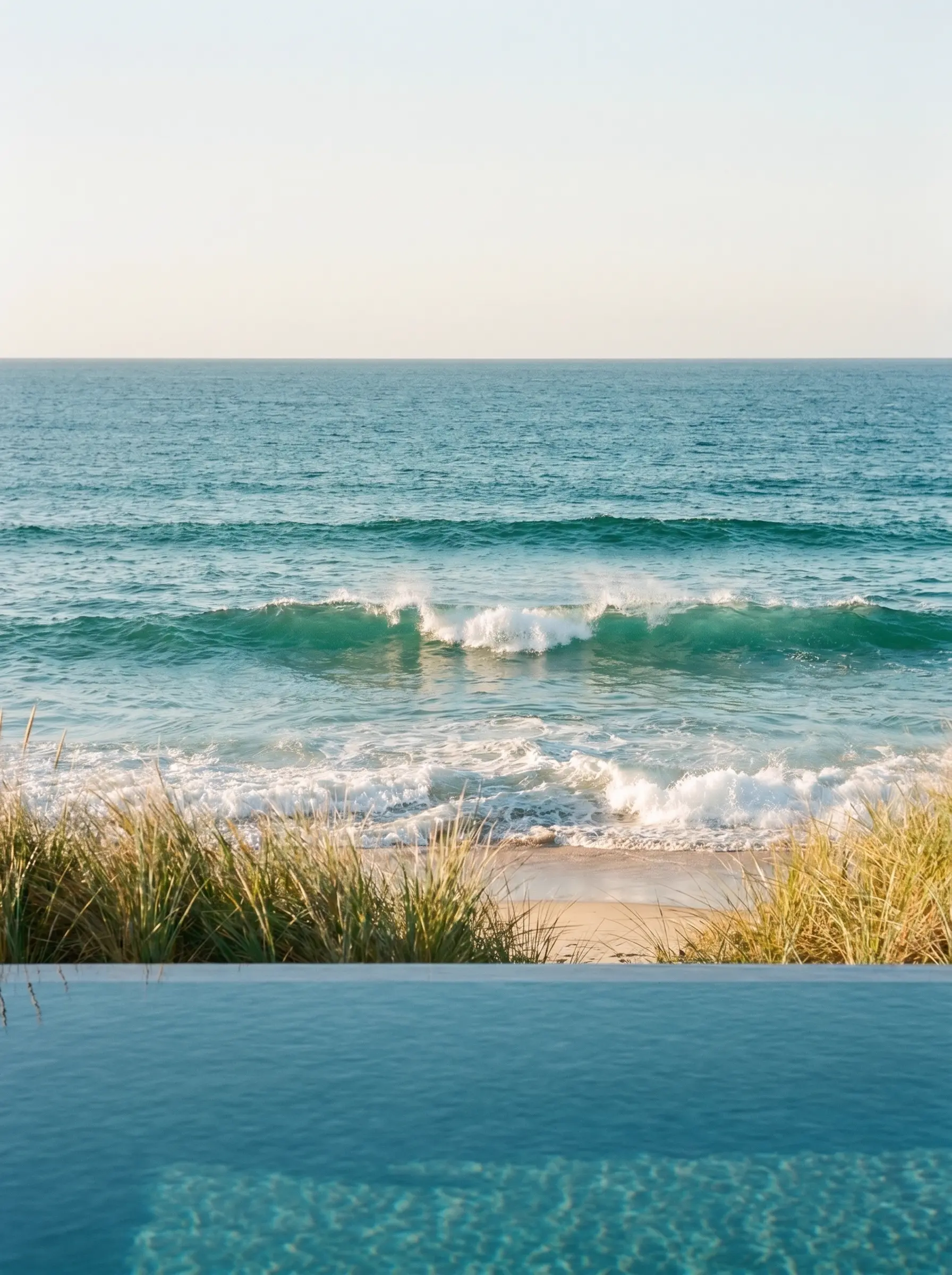
The coast is a single line of sand running down from Tróia toward Sines. What changes is the access and what’s around; the sea is the same: open, clean and cold.
- Praia da Comporta. The best known and the first one when coming down from Tróia. Next to the sand is Comporta Café, which has been serving meals and sunsets for more than twenty years.
- Praia do Carvalhal. Easy access and facilities. A good choice with children.
- Praias desertas. Between Tróia and Comporta, the sandy stretch remains without facilities. You park on the roadside and cross the dune on foot, about ten minutes. Bring water and food.
- Praia do Pego. White sand, palhotas and calm sea, heading toward Melides.
- Praia da Galé. Orange cliffs and a long staircase that is a viewpoint in itself.
Car parks at the beaches with facilities are paid in season. In August it’s best to arrive before ten.
Rice paddies and estuary
Behind the dunes lies the other half of Comporta. Rice has been grown for generations in the lowlands beside the Sado, and a local cooperative still works it. Storks nest on poles and chimneys, and the landscape changes color with each season.
All of this is part of the Sado Estuary Nature Reserve. Its waters are home to a colony of bottlenose dolphins, about forty, which feed in the estuary itself. Boats leave from Setúbal to see them.
About five kilometers from Comporta lies Carrasqueira and its stilt-built pier. Fishermen built it in the mid-twentieth century: wooden walkways over the mud to reach their boats at low tide. It’s still in use. At dawn or dusk, it’s one of the most serene places in the estuary.
Architecture of the place
The traditional house of the area is simple: whitewashed walls, low height and a roof of reed or straw. It was built with what was nearby and for the climate that was there.
Contemporary architecture in Comporta has learned from it. The most cited example is the Casas na Areia, by Aires Mateus: former fishermen’s houses converted into accommodation between 2008 and 2010, with thatched roofs and sand as the interior floor.
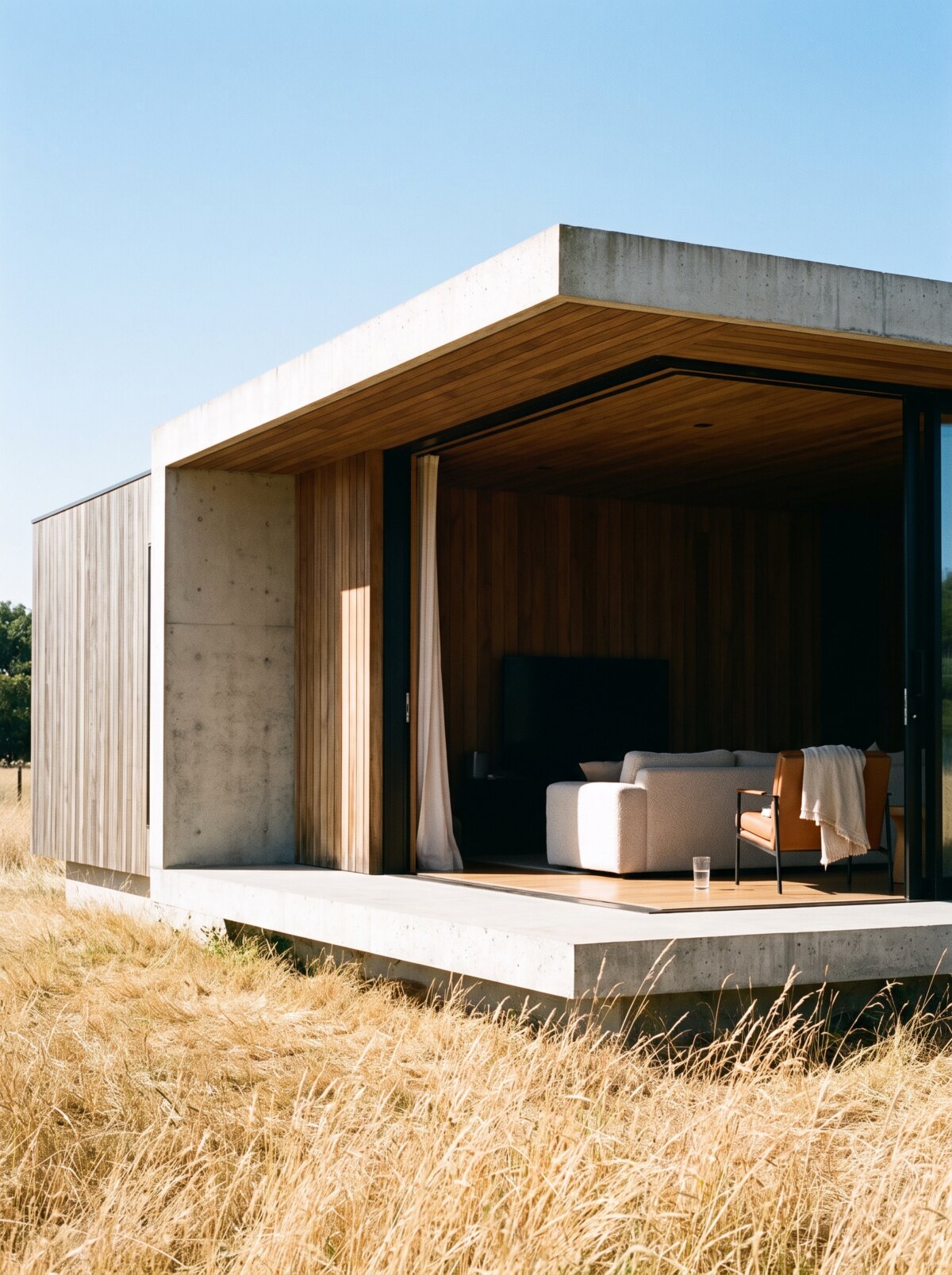
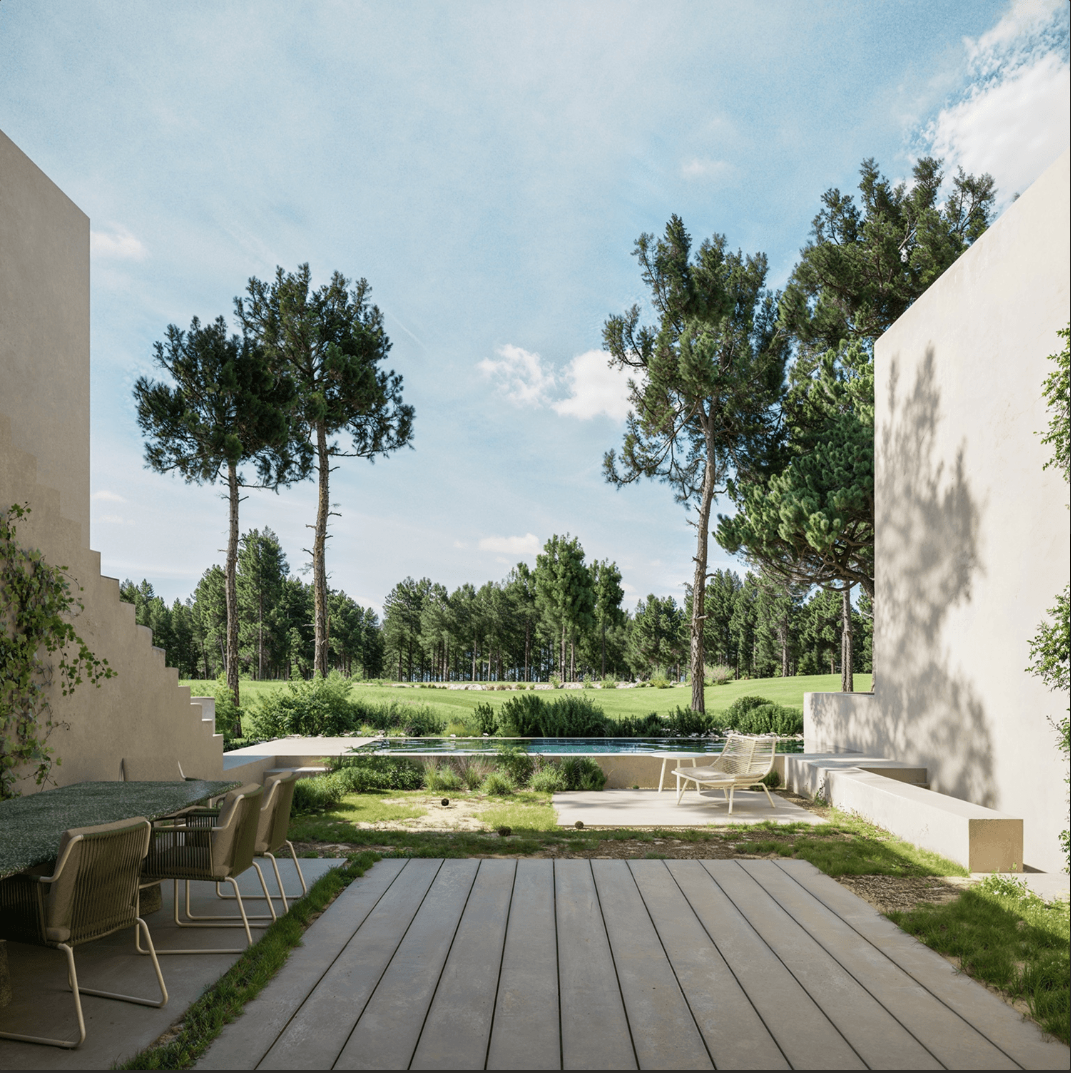
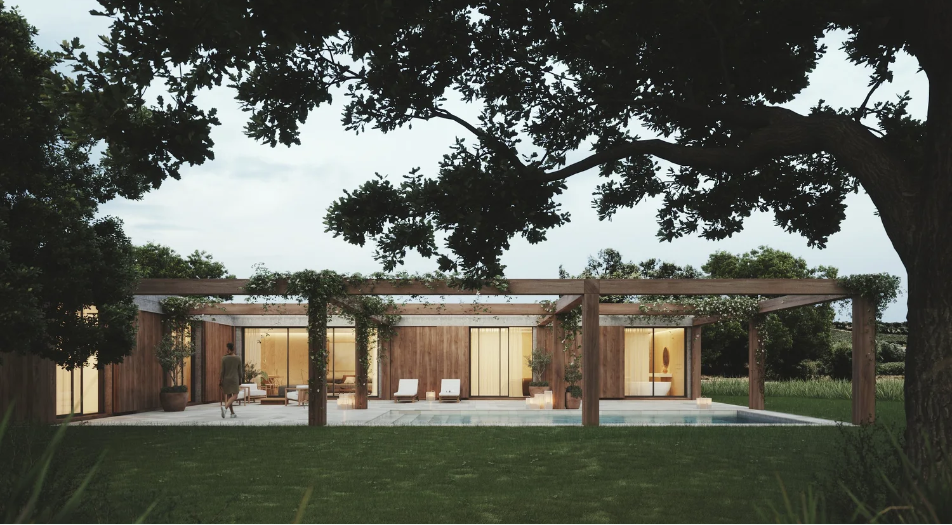
The idea is repeated in the best homes of the area. Low height, local materials, large openings toward the landscape. The house doesn’t impose itself on the pine forest or the dune. It sits within it.
It’s also in Comporta that Th’Eden is developing its first home of its own, with that same principle.
Where to eat
Comporta’s cuisine looks to the rice paddy and the estuary: soupy rice, grilled fish, clams, Sado oysters. A few places:
- Sado. Alentejo cooking by the river. The soupy rice is the reason to go.
- Comporta Café. On Comporta beach. Simple food, and the best time is the last hour of light.
- Sal. On Carvalhal beach, informal, with the feel of a fisherman’s house.
- JNčQuoi Beach Club. On Praia do Pego, for a long lunch by the sea.
- Simone French Bakery. In Carvalhal, for bread and breakfast.
In Carrasqueira, some fishermen sell oysters and clams directly on the pier. You can also buy and cook them at home: the estuary provides for that.
Outside summer, many restaurants cut back days and hours. It’s best to call ahead and book.
At a different pace
Comporta doesn’t ask for an itinerary. It asks for time: a morning at the beach, an afternoon in the estuary, a dinner without a clock.
The house provides the rest.